2026-09-02
BIKAI PUBLIC APPLICATION NOTE
Automated Pre-Column
Derivatization for the Analysis
of 23 Amino Acids
BIKAI 1511 Pro HPLC • Dual-chemistry UV detection
Application overview
An automated pre-column derivatization workflow expands amino-acid coverage by combining OPA chemistry for primary amino acids with FMOC chemistry for secondary amino acids. The autosampler coordinates reagent handling and injection, supporting a consistent analytical sequence on the BIKAI 1511 Pro platform.
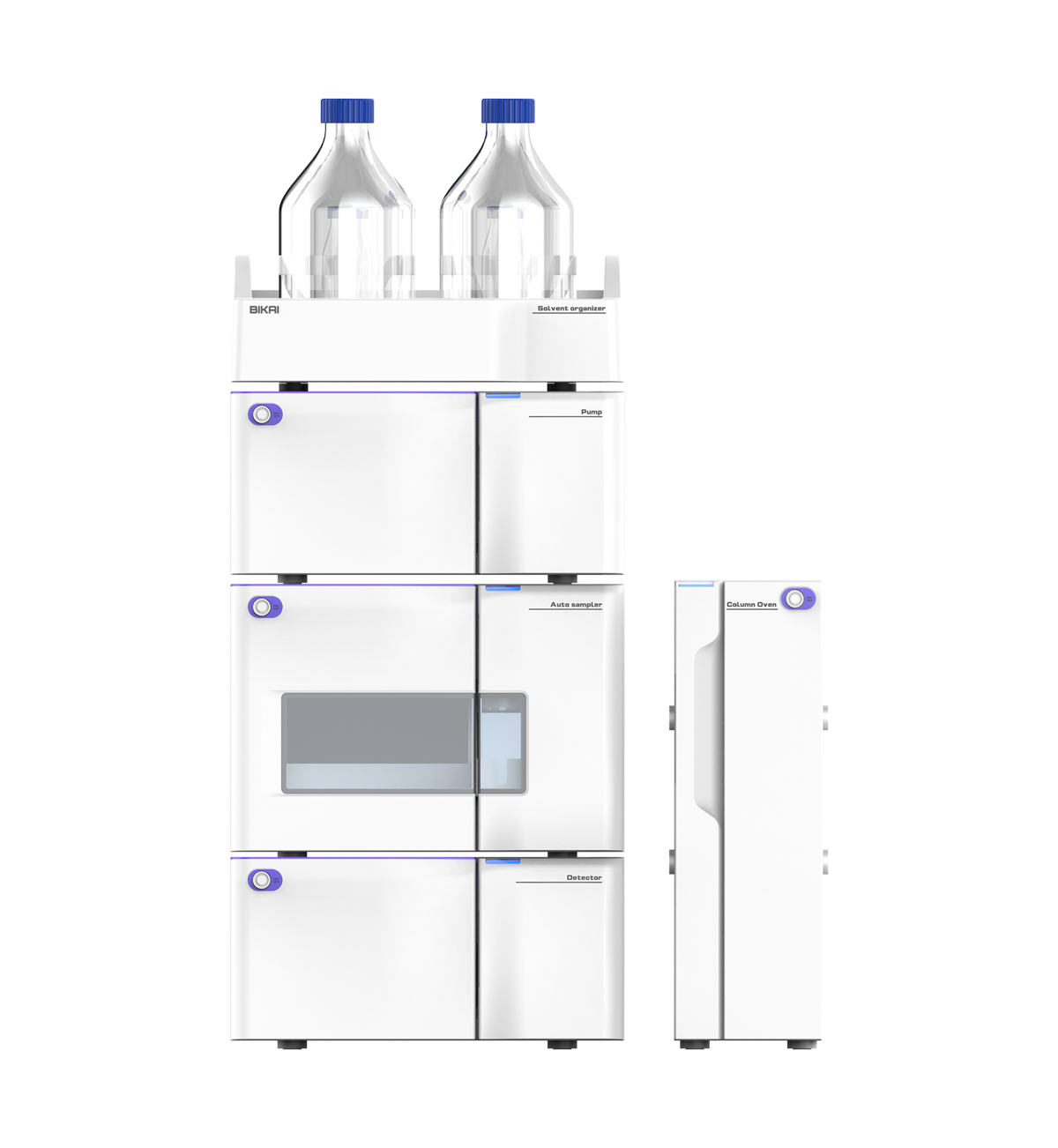
BIKAI 1511 Pro HPLC platform used for the reported application dataset.
|
23 AMINO ACIDS |
2 DERIVATIZATION CHANNELS |
>0.999 REPORTED CORRELATION |
01 • ANALYTICAL APPROACH
Many amino acids have limited native UV absorbance. Pre-column derivatization converts them into UV-active products before reversed-phase separation, improving selectivity and enabling routine UV–VIS detection. Complementary chemistries are used because primary and secondary amino groups respond differently.
|
OPA channel Targets 20 primary amino acids and is monitored at 338 nm. |
FMOC channel Extends coverage to three secondary amino acids and is monitored at 262 nm. |
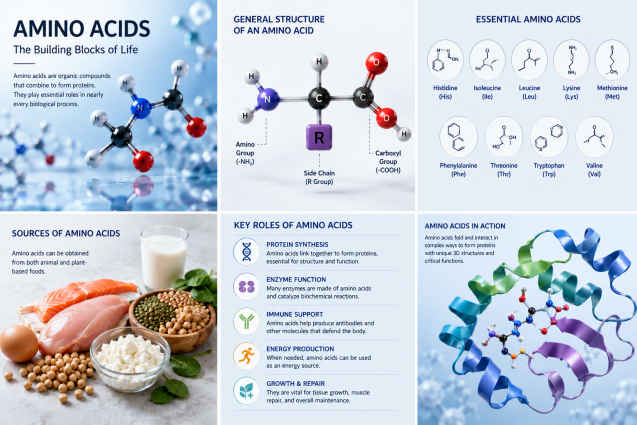
Amino acids are central to nutritional, biochemical and biopharmaceutical workflows.
|
Component |
Public configuration summary |
|
|
Quaternary pump |
Controlled solvent delivery for reversed-phase separation |
|
|
Autosampler |
Programmed reagent handling, derivatization and injection |
|
|
Column oven |
Stable thermal environment for chromatographic consistency |
|
|
UV–VIS detector |
Complementary monitoring of OPA and FMOC derivatives |
|
|
Automated sequence The autosampler carries out a controlled sequence of reagent handling, mixing, reaction and injection. Exact recipes, quantities, timings and instrument programming are reserved for supported method transfer. |
|
|
02 • PRIMARY AMINO ACIDS
Twenty primary amino acids are evaluated as OPA derivatives. In the representative training dataset, the 338 nm trace displays a distributed series of well-defined responses across the separation window, supporting qualitative review and quantitative evaluation of a broad panel.
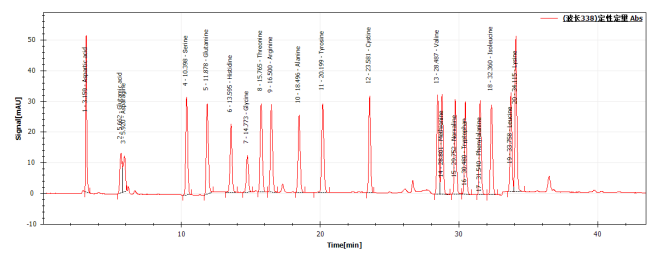
Figure 1. Representative OPA-channel chromatogram for the primary amino-acid panel at 338 nm.
|
20 PRIMARY AMINO ACIDS |
338 nm UV MONITORING |
OPA DERIVATIZATION CHEMISTRY |
The chromatographic profile demonstrates the capability of the system to resolve a multi-component amino-acid standard under the evaluated conditions. Complete peak-assignment and integration tables are deliberately not disclosed in this public version; they are supplied as part of the controlled application-transfer package.
|
Where this channel adds value The OPA channel provides the main analytical coverage for routine profiling in food and feed testing, fermentation monitoring, pharmaceutical development and biopharmaceutical research. Matrix-specific selectivity and recovery should be confirmed during local validation. |
03 • SECONDARY AMINO ACIDS
The complementary FMOC channel extends the panel to hydroxyproline, sarcosine and proline. Monitoring at 262 nm provides a dedicated view of these secondary amino-acid derivatives and completes the reported 23-analyte scope.
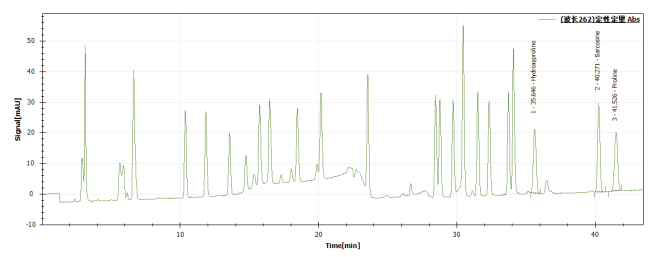
Figure 2. Representative FMOC-channel chromatogram for secondary amino acids at 262 nm.
|
3 SECONDARY AMINO ACIDS |
262 nm UV MONITORING |
FMOC DERIVATIZATION CHEMISTRY |
A four-level calibration evaluation spanning 25–1000 pmol/µL was reported for the complete amino-acid panel. Correlation coefficients exceeded 0.999 for all 23 analytes in the training dataset, indicating strong proportionality of detector response across the evaluated range.
|
What is intentionally omitted Individual calibration equations, response factors, peak-order assignments and detailed preparation instructions are not included. These controlled details are provided by BIKAI after application review and technical qualification. |
Performance figures describe the supplied training dataset and should not be interpreted as a universal specification. Laboratories should establish acceptance criteria appropriate to their matrix, concentration range and intended use.


Scan with WeChat
Have questions or want to learn more? We’d love to hear from you.
 +86 18613365565
 info@bikaicorp.com





© Copyright by BIKAI Technology (Suzhou) Co., Ltd.